What went into an absinthe kit
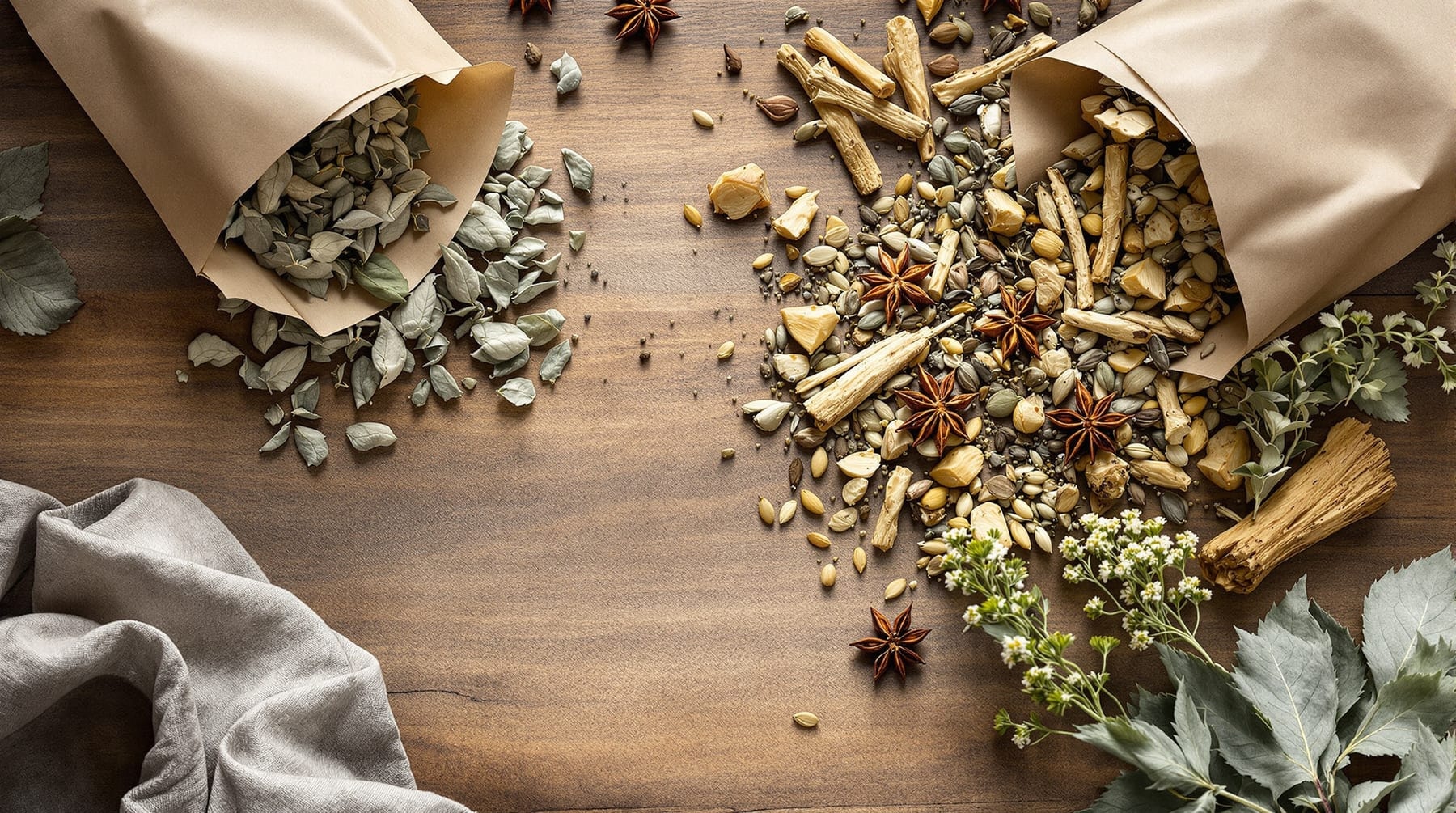
These herb lists record how the Absinthe Kits herb kit and wine kit were composed. Nothing on this page is for sale, and no prices, ordering or shipping information is included.
The absinthe herb kit
The core kit was assembled around a single litre of finished infusion and described its contents as the hard-to-find, finest-quality organic and wild-crafted herbs necessary to make it. The list, as published:
- Wormwood (Artemisia absinthium)
- Angelica root
- Anise hyssop
- Coriander
- Licorice root
- Star anise
- Lemon balm
- Calamus root
- An anise preparation described as “Magic Opaline”, included specifically to produce the milky louche that distinguishes absinthe from other liqueurs
Alongside the herbs came complete infusion instructions, a page of drink recipes, and a green fairy adhesive label for the finished bottle. Later versions of the kit, sold from around 2008, scaled up to two litres and added three lab-quality filters, a printed guide, two slotted spoons and two dozen shaped sugar cubes — the components described on the page covering the kit itself.
Read against the classic formula set out under the botanicals, this is a conservative and quite orthodox list, adapted in one significant respect: it leans on star anise and a prepared anise essence rather than on green anise seed, which is the standard compromise when a preparation is going to be macerated cold rather than distilled.
The absinthe wine herb kit
A second kit worked on an entirely different base. Rather than high-proof neutral spirit, it was designed to be steeped in a litre of ordinary port wine over about a week, producing what the site called an absinthe wine — a fortified, bittered, herbal wine considerably closer to a vermouth than to absinthe proper. Its herb list was quite distinct:
- Peppermint
- Sage
- Lavender
- Thyme
- Hyssop
- Marjoram
- Wormwood (Artemisia absinthium)
That list is essentially a Mediterranean kitchen-garden mix with wormwood as the bittering agent, which is very close to how wormwood wines were actually made across southern Europe for centuries before anyone distilled anything — and, again, exactly why German Wermut gave us the word vermouth. Period material also cautioned against use during pregnancy and against excessive or prolonged use.
Wormwood, sold by weight
The site also supplied loose dried wormwood, in two grades it took care to distinguish: certified organic, and wild-crafted. Its own explanation of the difference is worth preserving because it is a genuinely practical distinction rather than a marketing one — both grades contain the plant's essential oil, but the cultivated organic material ran to more leaf and less stem, while wild-picked material was more variable. Leaf is where the aromatics are; stem is bulk.
The drying method mattered as much as the source. Slow shade-drying preserves the volatile oil; heat and direct sun drive it off, which is why well-dried wormwood still smells sharply of itself a year later and badly dried wormwood smells of hay.
Scope of this page
This site sells nothing and quotes no prices. The focus here is the botany and the practical distinctions among the ingredients.
For the method these ingredients were intended for, see making absinthe by infusion.
Absinthe Kits · absinthekits.com