The Holy Trinity and the supporting herbs
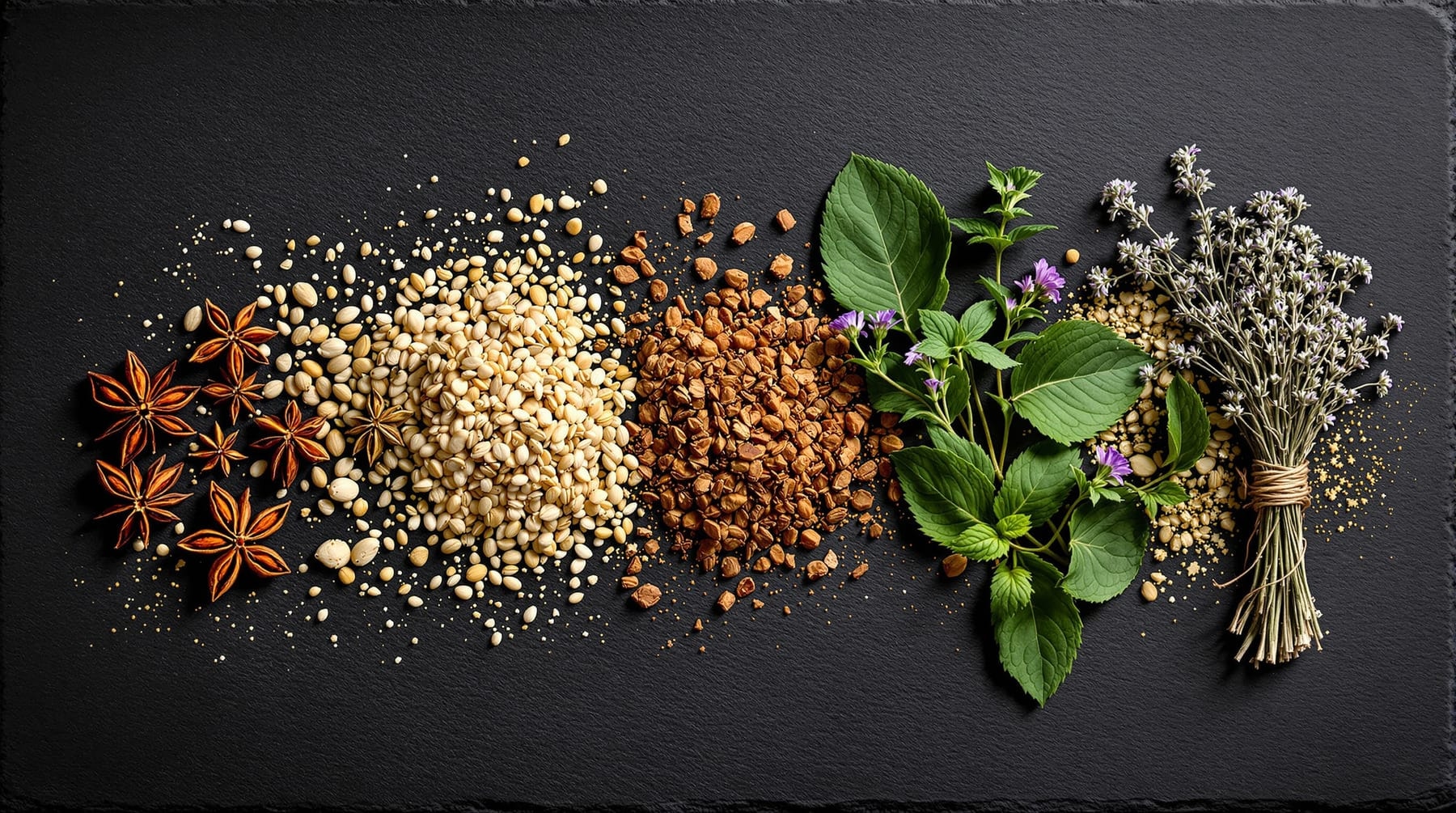
Absinthe recipes have always been secrets, jealously kept and passed down family lines, and yet the shape of them is remarkably consistent. Three plants form the core. Everything else is a producer's signature.
The Holy Trinity
Grande wormwood — Artemisia absinthium
The plant the drink is named for. It brings a dry, resinous, faintly medicinal bitterness and a herbal top note that nothing else supplies, and it is the reason absinthe reads as a herbal spirit rather than simply an anise one. Distillation leaves the harshest of its bitter principles behind in the still. The plant has its own page.
Green anise — Pimpinella anisum
The dominant flavour of any traditional absinthe and the source of the anethole that produces the louche. Green anise is a small annual umbellifer, and its seed carries a sweeter, rounder anise character than the star anise that is sometimes substituted or blended in. Without it there is no louche and, most tasters would say, no absinthe.
Sweet fennel — Foeniculum vulgare
Fennel seed reinforces the anise register but with a greener, more vegetal, slightly earthy edge, and it adds body. The trinity works because the three are complementary rather than similar: bitter and resinous, sweet and aromatic, green and rounding.
The colouring herbs
Distillate comes off the still water-white. A traditional verte gets its colour from a second, gentle maceration in the warm spirit, in which chlorophyll is drawn out of a small set of green herbs:
- Petite wormwood (Artemisia pontica) — softer and less bitter than its larger cousin; contributes colour and a light aromatic lift
- Hyssop (Hyssopus officinalis) — minty and slightly camphorous; a strong chlorophyll donor
- Melissa, or lemon balm (Melissa officinalis) — citrus and softness, and a good deal of green
That colour is unstable by design. Exposed to light and air over years it shifts through gold to a brown that collectors call feuille morte — dead leaf — and which is taken as evidence of natural colouring rather than of a dye. An absinthe left uncoloured after distillation is a blanche, or in the Swiss tradition la Bleue.
The supporting cast
Beyond the six plants above, every house had its own list. The herbs that recur most often across historical recipes, and that appeared in the kits described here, include:
- Star anise (Illicium verum) — a cheaper and more forceful source of anethole; used generously in some houses, disdained in others
- Angelica root (Angelica archangelica) — earthy, resinous, musky; adds weight and length
- Coriander seed — warm and citric, lifting the mid-palate
- Licorice root — sweetness without sugar, and a rounding of the finish
- Chamomile — apple-like and slightly bitter
- Calamus root (Acorus calamus) — spicy and aromatic; a traditional inclusion now restricted in food use in a number of jurisdictions
- Anise hyssop (Agastache foeniculum) — a North American mint with a strong anise note, used in some New World formulations
The Absinthe Kits herb lists named wormwood, angelica root, anise hyssop, coriander, licorice root, star anise, lemon balm and calamus root, together with an anise preparation for the louche — a recognisable, conservative reading of the classic formula adapted to infusion rather than distillation.
Why the balance matters more than the list
Every one of these plants is potent. Wormwood overdone is undrinkably bitter; star anise overdone flattens everything else into a single note; hyssop overdone turns soapy. The reason nineteenth-century houses guarded their recipes was not that any ingredient was exotic — every one of them was available in any market town — but that the proportions took years to get right.
For how the herbs were actually handled, see the page on making absinthe by infusion and the record of what a kit contained.
Absinthe Kits · absinthekits.com